
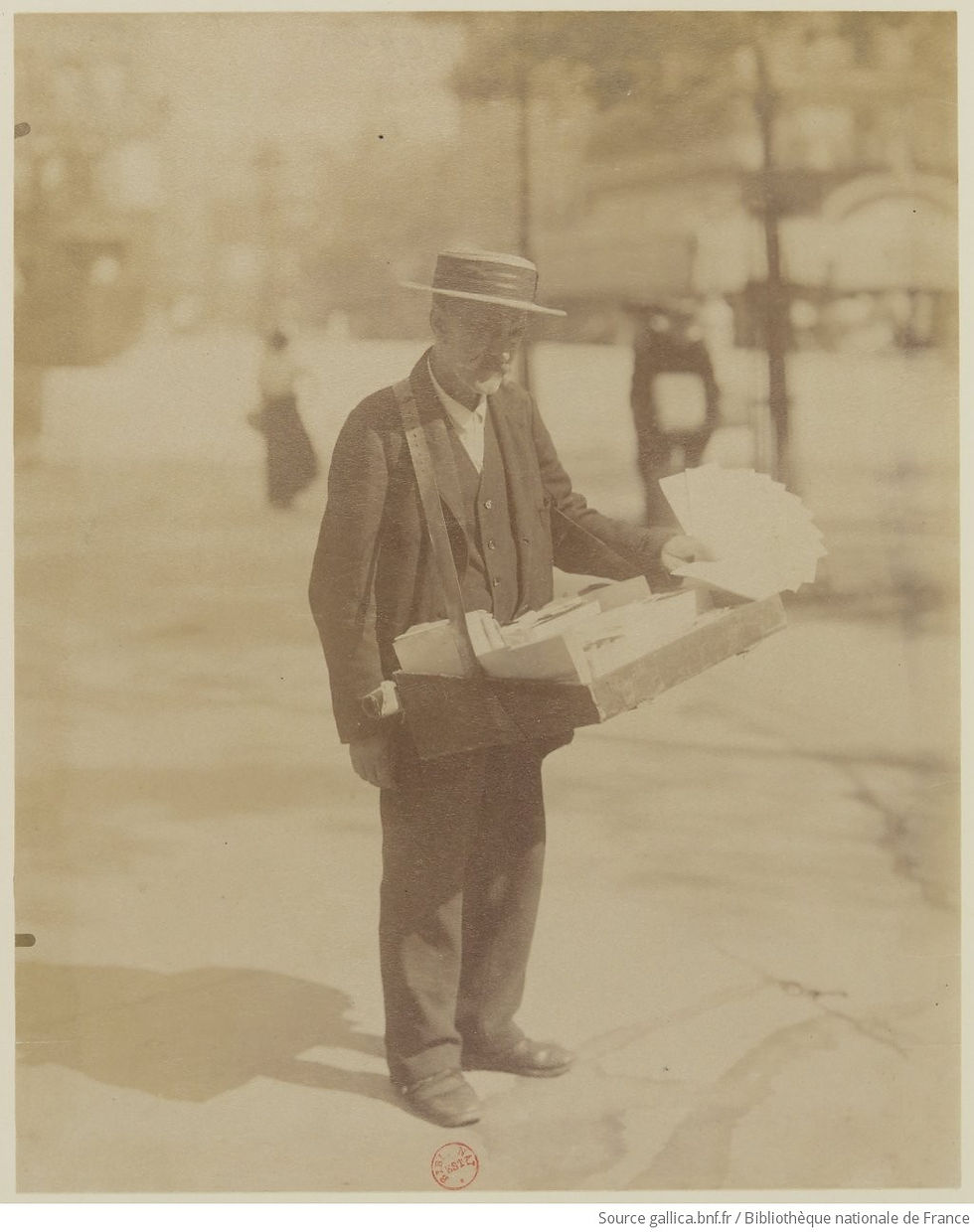
ENVELOPES AND CARDBOARD BOXES
In the early 19th century, given the scarcity of paper, correspondence letters were generally folded or rolled and then sealed with a stamp. The popularization of epistolary culture developed gradually throughout the century, reaching its peak at the turn of the 20th century. In 1840, Edwin Hill introduced the first envelope-folding machine and collaborated with Warren De La Rue to improve its operation. This Hill–De La Rue machine was patented the same year. A few years later, in 1856, W. W. Cotton developed a new envelope-folding machine. In 1876, Robert Parks’s improved machine appeared at the Centennial Exhibition. Beyond the technical machinery used in production, the spread of correspondence led to the mechanization of the letter-sending process, as evidenced by the atmospheric telegraphy machine invented in 1866. The expansion of this epistolary practice had considerable repercussions on the dissemination of objects and products complementary to the process, including mailboxes, postage stamps, and cards
.
Another industry and material also emerged within this dynamic of correspondence: cardboard. Derived from paper, reinforced cardboard was used as a container allowing the transport of objects larger than paper itself. The preparation of cardboard pulp involved the use of waste paper which, thanks to a rolling machine, was transformed into a layer thicker than that of paper. The thickness of the cardboard was subsequently determined by gluing together several layers in order to increase its rigidity.

The Mailbox / by an Indiscreet Observer, Delorme, René (1848–1890), Paris, Illustrated Bookshop (Librairie illustrée), 1875


Bibliography
-
HOYER Edbert, Le papier : étude sur sa composition, analyses et essais, Paris, Everling et Kaindler, 1884
-
MAURY Arthur, Histoire des timbres-poste français : enveloppes, bandes, cartes, timbres-télégraphe et téléphone, essais, marques postales et oblitérations, Paris, [s.n.] , 1907
-
PUGET Paul, La fabrication du papier, Paris, J.-B. Baillière et fils, 1941
-
ROBERT Victor, Catalogue illustré de tous les timbres-poste émis depuis 1840 jusqu'à 1893 : avec leurs dates d'émissions, filigranes, dentelures, et leurs prix de vente (2e édition), Paris, V. Robert, 1894
-
SMITH Elizabeth Simpson, Paper, New York, Walker, 1984
-
WATT Alexander, Manuel pratique du fabricant de papiers (Édition française) , Paris, B. Tignol, 1912