Paper Protagonists
In the 19th century, the rise of modern papermaking was closely linked to the fate of its key figures, who truly shaped the technical production landscape. During this century, several important personalities emerged, playing a crucial role in the development of the paper industry. Through their various inventions, they contributed significantly to the industrialization of paper and the establishment of mass production of this material. These processes, conceived and realized by these innovators, responded to the growing demand for paper, driven by profound social changes, as evidenced by the development of daily newspapers and the introduction of compulsory schooling in certain countries at the time. In response to this dissemination and social transformation of paper, other protagonists in the use and spread of knowledge also appeared, further diversifying the applications of this revolutionary product.
Theater Portraits, Bust Portraits of 19th-Century Actors and Singers, 1820–1840, Bibliothèque Nationale de France
![[Portraits_en_buste_d'acteurs_et_[...]_btv1b10464664j_1.jpeg](https://static.wixstatic.com/media/243e7c_af53264f8cec4c11b25217db36fd825e~mv2.jpeg/v1/fill/w_438,h_314,al_c,q_80,usm_0.66_1.00_0.01,enc_avif,quality_auto/%5BPortraits_en_buste_d'acteurs_et_%5B___%5D_btv1b10464664j_1.jpeg)

After completing military training in the French army, this sergeant major worked as a proofreader at the famous late 18th-century printing house of Pierre-François Didot.
Promoted to director of accounting services at the Didot-Saint-Léger printing house in Essonnes, Robert developed a new process in 1799 that enabled paper to be produced continuously, thereby significantly reducing manufacturing time.
The development of papermaking and the transition to modern industrialization depended heavily on this invention, which altered the growth of paper mills in the 19th century.
Louis-Nicolas Robert
(1761-1828)

German inventor and machinist Friedrich Gottlob Keller filed the very first patent for extracting cellulose from wood.
While experimenting with different materials that could replace rags in the production of paper pulp, in 1852 he proposed the very first machine that could transform wood fibers and bark into cellulose. This invention, which was later improved, revolutionized the paper industry and helped overcome the crisis caused by the rags shortage.
Friedrich Gottlob Keller
(1816-1895)

A German inventor and innovator, Heinrich Voelter continued and improved the work of Friedrich Gottlob Keller.
Continuing to explore the field of wood-to-cellulose processing, he developed a machine in Germany that grated and sorted wood chips in order to obtain a smooth pulp, known as “mechanical pulp.” From then on, the European paper industry adopted this process and adapted production facilities to this innovation in the conversion of raw materials into cellulose pulp.
Heinrich Voelter
(1817-1887)

German inventor Koening developed the first printing press powered by a steam engine.
This technical breakthrough, patented in 1812, changed the course of printing history, transforming it into a mechanized industrial process.
Friedrich Koening
(1774-1833)

French publisher and bookseller Édouard Dentu left his mark on the history of 19th-century publishers and literary publishing houses.
By introducing popular novels and anecdotal illustrations into his catalog, he contributed to the diversification of literary genres that were previously restricted to scientific and technical subjects. His collections included works such as Alfred Delvau's Histoire anecdotique des cafés et cabarets de Paris (Anecdotal History of Parisian Cafés and Cabarets), illustrated by Gustave Courbet, Léopold Flameng, and Félicien Rops.
Édouard Dentu
(1830-1884)

In 1847, when this young French illustrator was only 15 years old, he published one of his very first short stories accompanied by humorous drawings from his popular satirical series: Travaux d’Hercule (The Labors of Hercules).
Following in the footsteps of German artist Rodolphe Töpffer, Gustave Doré is considered one of the precursors and pioneers of comic strips. A new take on print media, comic books gained popularity during the 19th century through various literary adaptations.
Gustave Doré
(1832-1883)

French journalist Auguste Nefftzer founded a daily newspaper called “Le Temps” in 1861.
In addition to his prolific journalistic activity, which marked the end of the 19th century, he introduced a section dedicated to novel serialization in his daily newspapers. An interesting literary tradition, serials allowed the adventures of famous novels to be resumed through several episodes published separately, contributing to the promotion of works by several famous writers and novelists. This was the case for Jules Verne when his serial Around the World in 80 Days appeared on November 6, 1872, in Le Temps.
Auguste Nefftzer
(1820-1876)
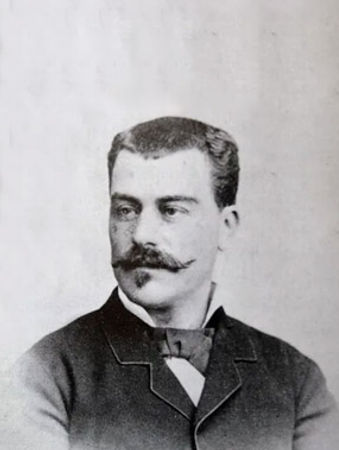
A renowned educational publisher of the 19th century, Armand Auguste Colin, alongside Louis Le Corbeiller, achieved great success in 1871 with his project to publish textbooks for school use.
He also developed one of the very first illustrated dictionaries, which was published after his death in 1905: Dictionnaire encyclopédique illustré. Publishers such as Pierre Larousse, who were already publishing dictionaries such as the Grand dictionnaire universel du XIXe siècle, adopted the new trend of illustration, which became part of school-level teaching methods.
Armand Auguste Colin
(1842-1900)


Bibliography
-
FEBVRE Lucien, MARTIN Henri-Jean, « La question préalable : l'apparition du papier en Europe », dans L'apparition du livre, Paris, Éditions Albin Michel, coll. « L'évolution de l'humanité », 1971, p. 39-60
-
Royal Museum of Mariemont, Le Papier. Techniques De Fabrication Hier Et Aujourd'hui, Bibliothèque Mariemont, 1981
-
ORSENNA Erik, Sur la route du papier, Paris : Librairie générale française, 2013